Saturday, February 8, 2014

New Week, New-ish Fair: Crackers, Giant Rats, and the Art of Patter

Well, the South Florida Fair has ended, and I'm now at the Florida State Fair in Tampa, some couple hundred miles northwest of where I was last week. 

I rode over in Benjamin's van, and really had the "deluxe traveling artist experience"--which includes very little sleep, driving behind a disassembled roller coaster on the highway, grooving to some Dave Matthews tunes, detouring to visit caricature pal Michael White, enjoying some alcoholic beverages, a hot tub, ooohing and aaahing over vintage comics, a few more alcoholic beverages, ending up sleeping at Michael White's, having coffee in a treehouse, going to a Waffle House in the same clothes I'd been wearing for 30+ hours, detouring to see sleeping manatees, then arriving in Tampa. 

Sarasota artist Michael White is the consummate host, by the way. His home and back yard are amazing, complete with expertly designed Koi pond and fire pit, and his cat is friendly and adorable (just like its owner). We had a fantastic time and he didn't roofie either one of us. 

Here in Tampa, we see many of the same names & faces, just in a different arrangement. Imagine someone upended your neighborhood, put all the buildings in a Yahtzee cup, shook them, and spilled them out in a new random pattern. There are a few new additions, and a few missing pieces, but it's familiar enough. 

We still have a tasty array of food on sticks:

TJ the Painter and Spencer (mentioned in my last post) are here, and I have spotted a few different funhouses with TJ's fine airbrush work adorning them. 

The Wacky Shack was a particularly fun find-a-caricature exercise. 

The West Palm fair has an old-timey space filled with trees and folks in antiquated garb, called Yesteryear Village; here in Tampa there's a similar place, it's just called Cracker Country. I'm not kidding about that. 
So if you're far enough down South, bear in mind that "cracker" is not the offensive term it is elsewhere in the country. Or maybe it is, except for the few history buffs manning their stations in Cracker Country.
It really is a beautiful area, with historic pine buildings and huge live oaks draped in Spanish moss. Little demonstrations on Cracker cookin', rope-makin', plowin', carvin' and other handicrafts missing the letter G take place all day.

Caricaturin' can be found closer to the midway, and (sadly), just like in West Palm we have loads of artists at this fair. Apparently the Florida fairs are always overpopulated by vendors because of the timing--no other shows are going on during January and February, so people try their luck down here knowing full well that there will be a load of redundancies.

For instance, we have two tornado-themed rides just steps from each other on the midway.

But wait . . . there are two rides called "The Enterprise" as well!
And then there's two rides called "Super Himalaya" (and you guessed it, we also have a plain old "Himalaya" too).
Bloody Hell, there are TWO different giant rat exhibits at this fair! On the same aisle even!
Just when you think you've hit on a specialized niche, right?

We are a bit unfortunate this year in that our neighbors are a couple of barkers trying to sign people up for time-share presentations. You know the sort. A word to the wise: If you are considering plopping money down to work a fair, FIND OUT IF TIME-SHARE ASSHOLES WILL BE NEXT TO YOU. And if so, avoid that spot at all costs. Your revenue will be cut in HALF because time-share barkers destroy neighboring businesses. By the time people walk past us they are doing the time-share hustle: shuffling quickly, avoiding eye contact, and saying "No thank you!" as the jerk with the clipboard pursues them with questions like "Are you part of a couple that lives together?" "Can I give you a free vacation?" "Are you two married?" 

I hate them. Almost as much as they hate themselves, I'm sure.

There is a more colorful brand of barking that I far prefer--not that the time-share people have the wit or showmanship to ever pull it off. Yet again, I have to mention my colleague Benjamin, who is a delight and a menace all in one package: he has the carny barker thing down. During slow days he cracks us up regularly with his patter. I have stolen a few lines from him, though I cannot deliver them with the same lilt or gusto. 
Here's a stream-of-consciousness paraphrasing of what spews out of Benjamin on a daily basis:

STEP right up get-cher CARICATURES here...Oooh look at that couple, they look like their Polyjuice potion is wearing off!...Right here folks, step right in we'll make ya look like a DRAWING!...Get-cher pitchers here, pitchers folks...Let us diagnose what is wrong with your face!...C'mon in folks, get yer pitcher draaaaaawn...Uh oh, that couple's in a hurry, there's a spaceship waiting for them in the parking lot!...Step right up folks, every face is a work of ART!...YES, ma'am, I CAN make you pregnant!...I can draw ya that way too, heh heh heh!...Get drawn today, we make ya look funny!...Who's ready who's next?...Come and let us show ya what you'd look like if ya weren't so gosh-darn ugly!...Who's ready who's next?...Look out, we'll do a number on you folks--a number two, heh heh heh!...Yessir yessir get-cher CARICATURES here--ya can't spell it but I know ya wannit!...Step right in, everyone's a winner!...We draw FACES, if you gotta face, this is the place! 

Delivering good patter is tough, and not everyone can do it. Not everyone should. Benjamin has been described as a three-year-old wearing a grown man costume: he just has a way about him that seems to deflect any actual ire from customers and passers-by. I once told Benjamin a line I FELT like using but would never have the guts to, when annoying helicopter moms tell you the list of flaws they want you to "fix" on their child. Sure enough, the next day he cheerfully delivered that line to a live customer: "Well there are a lot of other, more attractive children here at the fair today, ma'am--if you're not happy with how your child looks maybe you can borrow someone else's child and I can draw them instead?" And he got away with it, thanks to his baby blues and an impish tone. He describes this as a friendly verbal "fuck-you" and said some customers need it from time to time.

I have seen many caricaturists incorporate good, bad, or just plain dull patter into their business. I firmly believe that we are selling an experience, not just a drawing, and inside many caricature artists you will find a budding comedian. Judging from the caricaturists I've seen really be able to pull off good patter, it takes a high degree of intelligence, a quick-mindedness so as to always be ready with a comeback, fearlessness coupled with humility (so as to always be ready to be the butt of your own joke), and the ability to read people quickly and detect little behavior and facial cues. I'm talking about the type of person who, if less scrupulous, might do really well as a psychic giving cold readings.

My first boss in this business, Irv "Quickdraw" Finifter, was quite a showman--and he could talk anyone into the chair. And, true to his self-given moniker, he was fast. Whenever I would sheepishly try to call out and entice people to get a drawing, and they would walk on by, my coworkers would snicker "Irv would be putting it in a bag for them by now." Engaging the public (and the sitter) with good patter WILL actually influence how they like the drawing. Not just that day but permenantly. It ties the drawing to an experience, and every time they look at it they will recall the feelings you gave them as you drew their picture.   

Make it a fun experience, not a timeshare presentation! Learn a few lines from insult comics, carnival barkers, and improv comedians--and your friends and colleagues who are good at patter. You can stick with the safe, reassuring lines about the person having a nice smile . . . OR you can go out on a limb and see what you can get away with. Those can be memorable times, and you can be rewarded with belly laughs. And you are only spending ten minutes with people but some of them will remember you for the rest of their lives. How fucking cool is that?!

Sometimes what Benjamin does is tantamount to brainwashing on a small scale. Or therapy. Last year I heard him convince a guy that if he didn't like the drawing that meant it was actually more valuable. As he drew he explained, "Oh yeah, if it offends you then that's the best possible outcome--if we hit a nerve that means we have connected, we have produced a true caricature, and the ones that piss you off make the BEST conversation pieces, you can put it up and talk smack about the artist for decades to come, and ALL your friends are gonna have opinions on it." And on and on he went. By the end of it, Benjamin revealed the finished drawing and the guy loved it--but I think he was slightly disappointed that he loved it.

Last week, one couple in West Palm came at the end of the night, when the fairground was pretty empty, and remarked that Ben reminded them of Hunter S. Thompson (he does bear a weird sort of resemblance). Without missing a beat, he stuck a cigarrette in his mouth, dangled it just so, popped on his bucket hat, and proceeded to verbally berate the couple with abuse and obscenities as he drew them. 

They loved it. 

I hope the day will never come that Benjamin has to pitch time-shares, but if he ever does it sure would be fun to watch. 

Well, until next Tuesday, my crackers . . .


Tuesday, February 4, 2014

The Carnival Arts

There is a school of American performance acts known as the "Western Arts" that includes whip cracking, trick-roping, knife throwing, and all those other circusy side-show type entertainment you'd see at a carnival or a State Fair. I would argue there is also a brand of visual art, wholly American, called the Carnival Arts, and it comprises the good, the bad, and the weird stuff you see as you trawl up the midway at any traveling show. And yes, even though caricature's tendrils reach out into respectable museum art (even Da Vinci drew "grotesqueries" after all!) we caricature artists are definitely members of this club. 

Another member of this club, a t-shirt painter named Spencer, introduced himself this year, said he liked my style, and sat for a drawing. It was a rainy day, my materials weren't performing well, and I was revising the drawing in my head even as I finished it--so I'll try again in Tampa. But he was a fun fellow and longtime crewmember of the circuit, and he was well-aquainted with the other artists in my crew. In the off-season, Spencer also works with a few of the other t-shirt painters doing black-light glowing murals for roller rinks and bowling alleys and the like. I was blown away by his t-shirt airbrushing abilities when I visited his stand later on. 

We will return to Spencer in a bit . . . for now, I want to take you on a tour. Any place you go can be a museum if you pay attention. Let me be your carny docent as we walk the hallowed halls of carnival art . . . 

Be careful, some of this stuff might show up in your nightmares later . . . 
These clown head garbage-can toppers in particular are memorable. Warhol would have liked them. (Sorry, Ben, I only had eight photos, so you get to complete the grid. Warhol would have liked you too.)

A lot of the hand-painted work doesn't bother worrying about copyrights or trademarked characters . . . 
I mean, calling Spiderman a Tramp (on a sign for the bungee trampolines) is one thing, but it does take an extra-big set of cajones to put up some bootlegged mouse art in Florida, for Pete's sake . . . 
And in this artwork on a ride called "The Fighter," we see the painter simply copied a topless photograph of MAD artist Tom Richmond without even crediting him as the model . . . 
The nerve. 

But seriously, airbrushing is still alive and well at the carnival. Big and small examples of airbrush art are everywhere. 
Did I say alive and well? Maybe not altogether well. There were some not-quite-ready-for-prime-time pieces here and there, but even the awful can be fun to look at. Like this spacey scene, starring the hovercraft-driving love child of Napoleon Dynamite and Buck Rogers?
Orange space codpiece for the win!

But hey, it's hand painted. As an airbrusher and carnival arts connoissuer, I frown upon the cut-and-paste jobs. 
This haunted funhouse had monsters lifted from (I'm just guessing) Heavy Metal and other sources, just writ large--you can't see it from these photos but the resolution was so low that it stood out like a sore thumb, screaming "I was googled and screen-grabbed and printed way larger than I was ever meant to be!" Ughhh. 

But this one hurt my head. 

"Avenger Kids" showed slightly more effort--someone went through the trouble of pasting headshots (of their relatives, from catalogs, who knows?) onto bodies of Halloween costume models. Not sure what bothers me more--the reappropriation of child models or the implication that Supergirl and Wonder Woman are Avengers. 

But several attractions were, indeed, works of art. The "Enterprise" ride had been my favorite since I saw it last year. 
I apologize, the lighting is never great for photos, as the ride is highly reflective, and I do not have proper authorization to climb up and get close-ups, but the thing absolutely takes your breath away in person. Colors are vivid, the likenesses of Nimoy, Pine, and Quinto are spot-on, and it's just FUN. 

Some of the funhouses have been repainted over the past few years with some clever work. 

Check out that lion's expression. That was done by a cartoonist who gives a shit. That's a proper lion. Great use of guard rails to look like a cage, too. 

More great airbrushing stuff. The light touch of anime on the dame in the lower right panel makes me wonder if it was done by some gang of younger artists, but it has a lot of other markers that tell me it's done by someone old-school. 

Hmmm. Wait a second. I walked back and saw that all the really great funhouse paintings were done by this TJAho/TJ the Painter guy (or gal). My admiration and curiousity grew, and I vowed to google him (or her) later. Something about the work made me wonder if this person worked as a caricature artist previously. 

Later on, I asked Benjamin if he had any favorite carnival art that I should scope out before the whole thing pulled up stakes. "Anything by TJ" he told me. Ah yes, I agreed, I really liked the ones by TJ I had seen. Wait--you sound pretty familiar, the way you said that, have you met this guy? I asked. "Well yeah, he's right down there, he's Spencer's boss. He did the Enterprise Star Trek ride too." Ben smiled. He knows I love me some Star Trek.

HOLY SMOKES, this incredible painter is right here, just down the row from us, spraying Spongebobs on shirts the whole time??? 

I walked over after the midway lights shut off on closing night, and introduced myself. He gave me a hearty handshake and told me he'd seen Spencer's caricature (I winced). 

TJ is really nice guy, just as I'd been told, and he was happy to share his story (and okay with me sharing it here). Turns out he had been a caricature artist down in Opryland, back in the eighties, and he'd gotten his start in that using the lecturer's chalk pallette and glove--just like I did, a few years later in Baltimore. We sat there naming names for a while, seeing if we knew any of the same people from back in the day. We didn't hit on any right away, but this business is like the Kevin Bacon game--given enough time, you discover connections. 

He told me of his many years mentoring with Bill Browning, a legendary carnival and sideshow painter. He does standard brushpainting and airbrush too, and he said Bill taught him some special tricks for getting the carnival look just right. Bill is a painter of some repute, he lives in the "carny town" of Gibtown, FL, and he is getting on in years, suffering from Alzheimers from what TJ had heard. We both exhaled a small lamentation on that--it is a sad and familiar feeling to lose a mentor. He offerred to run up to his loft and grab a painting Bill had gifted him to show me (his loft was in the trailer that his airbrush operation was housed in, just yards away from us), but I told him I didn't want to delay his closing procedures any further, and maybe I could check it out in Tampa. 

I do not know if Bill Browning had anything to do with these sideshow signs, but they were the "sideshow art" I saw at the South Florida Fair. Certainly a niche all its own. 

I googled Bill Browning and went down some dimly-lit channels of the internet. Photo essays, some writing done by sideshow performers, a few regional articles. I am nosy, and the internet is vast, but there wasn't a whole lot out there. Still, the carnival is its own internet, and "famous" in the carnival doesn't necessarily mean "famous" on the internet. As I said, my "research" on TJ consisted of walking half a block and shaking his hand. He says he has a facebook page but ignores it, and his website is in woeful need of attention but he hasn't found the time because he's so busy getting work by word-of-mouth. 

You can see TJ's site at http://tjthepainter.com/
in the meantime, or keep an eye out for his signature at the next carnival or roller rink you visit!


Friday, January 24, 2014

A Dispatch from the Road: The South Florida Fair

Welcome to West Palm Beach! I have been in Florida for a little over a week now and boyyyyy am I excited! 

Well, not really. This fair is terribly overpopulated with caricature artists. This year I am one of twenty--that's right, twenty picture-slingers--trying to grab a share of the market down here. It's nice seeing so many familiar faces, some people I know from the ISCA con, some I know as friends-of-friends, and of course the old colleagues I've worked with year after year. 

I'm bunking with Sara McMullin, one of my favorite carnies (sorry, whoops, she prefers carnival-American). Sara delivers a great likeness and is fantastic with people. When she and I get together--and I am not overstating this one bit--it's a no-holds-barred blue comedy fiesta worthy of two Oscars, a Tony, and six Emmys. And maybe a Grammy. No bodily functions, private parts, vulgar words, or taboo subjects are off limits. We have musical numbers, we have alter-egos, we do muppet voices and accents and jazz hands. This isn't a state fair, it's an 18-day celebrity roast when she and I get together. Long story short: we think we're HILARIOUS. 

Ben and Pete, the other half of our crew, may not always appreciate our humor, but it's not for them--the Sara & Celestia Show is all for us. Long story short: they probably think we're ANNOYING as all fuck. 

So many artists does unfortunately mean a smaller slice of the pie for everyone coming to the table. This fair is never a huge moneymaker. I luckily have a small handful of "be-backs" at this fair--people who become a fan of a particular artist and seek them out each year as a tradition. Plus, I think our booth benefits from the whole airbrush angle. We are the only airbrush caricature folk among a sea of artstix and one guy inside the pavillion doing charcoal portraits and $10 "cartoon drawings" that I hesitate to call caricature. Then again, according to the fair office, I'm not even doing caricatures. I'm doing "caricarure."
Outdoor airbrushing has its ups and downs. Florida seems to have two settings: arctic tundra and hot mosquito soup. This turns your bottles into little paint grenades when you open them up in the morning, as it's 40 degrees warmer than when you closed them up the night before. We haven't had flooding yet but that'll happen at least once. Our new location is probably going to be a lake when it rains: we are directly over a drain. We also face a big stage that has acts all day and night, including a four-day marathon talent show called "Stars of Tomorrow." Fitting, since before stars become stars, they are swirling masses of hot gas. And that's what most of these folks sound like. 

So far, despite the slow stretches, it's been worth my time. One of the benefits of so many artists in this environment (besides socializing and the 2 am parking lot frisbee sessions, I mean) is you get to mix things up a bit, see what new materials folks are using, what techniques might be worth stealing--er, I mean emulating. We have very different work walking by us every day, from artists influenced by the Beasthead movement and the hyper-surrealistic stuff Chris Chua and the California Boys produce to the pleasing yet stretchy cartoon likenesses that are the hallmark of artists trained at Kaman's. Nick Mitchell, of ZombieCaricatures.com fame, even made an appearance and joined our merry band for most of the fair. 

Nick and Sean kindly surprised me early in the fair with an amazing zombie caricature (and it looks like I'd been working at a fair when I was bitten, judging by the apron, easy-hairdo braids, and contents of my vomit). I adore those boils. Definitely a fine addition to my collection. 

Speaking of collections . . . Sometimes we get a special breed of be-back. On lucky nights we run into that rare species: the visually literate  discerning collector of caricatures. These folks seem to "get" what we do and are the polar opposite of the annoying patron who wants all flaws removed and complains that it's cartoony and doesn't know what a philtrum is. 

Well, I got a collector couple last night. Awesome folks, and they had a Chris Chua / Cory Lally collaboration in hand. It was wilder than usual for those guys, and  when the couple showed me their cell phone gallery I understood why. Among their dozen or so caricatures, they had two previous Chuas, and he clearly was amping it up each year. After seeing it, I sheepishly told them I was way different in style and definitely couldn't pull off what the California Boys did, but I'd do my best. No problem, they said. He likes the crazy ones, and she likes the pretty ones, they explained.

Well, I hate throwing these together because it amplifies my blandness, but here they are. Chris and Cory definitely push the boundaries of live chair work, and you can see both pieces zero on on those ears and her smile--but holy balls do they produce a different species of work. Sometimes the radical cubist stuff doesn't fly with carnival patrons. We have had one or two people swing by and grumble, hold up an awesome drawing they got from a different stand and expect us to agree that it "doesn't look like them." Boy are they surprised when we study it and point out they have a remarkable piece of art they should treasure. It sometimes requires a little work from the viewer, you cannot digest a Chua drawing in a quick glance. I have compared it to corn dogs fried in truffle oil: it's mixing a carnival staple with valuable stuff, which can be appreciated by those gourmands who have cultivated a palate for it--however the average fairgoer just thinks it tastes weird. 

But gosh darn it, I am so pleased that caricature gourmands exist. And when collectors do visit the fair and show us a cell phone gallery of past work, it is delightful to find familiar styles and see who has already drawn them, and have a conversation about where else in the country (or in the world!) they have been drawn. Every artist I know will slow down, gather their caricature brain cells together, pull out the pencil and do preliminary sketching, and really try to do a nice job for folks like this. Inevitably, I end up feeling frustrated with myself that I couldn't do a better job. But collectors definitely get their money's worth! 
 
When it comes to the rest of the fair goers getting their money's worth, this fair provides a change of pace due to our pricing. Market forces act predictably: with increased supply, prices are held down. We are set solidly at prices that are quite lower than what I'm used to, and that kind of takes some pressure off. I have switched to marker for a faster, simpler product, and I find myself aiming for bold, quick linework rather than subtle nuances. I do try to always give folks a nice product, but--unless they are collectors!--I don't labor over it as much as I would normally. (Known sometimes as the "Screw-it-they-aren't-paying-much-for-it-anyway" approach.) We also throw some black airbrush onto the black & whites, which makes them pop a bit more than graphite--it's a quick way to lay down a lot of contrast, but it's also so much easier to wreck the picture during that last stage! Still, it's refreshing. It works a different part of the drawing muscle, seems like. 

I took a tip from the ISCA Facebook page (thanks guys!) and loaded up some crayolas with Copic ink using that handy-dandy marker maker. It's not a perfect tool but I'm digging it. Crayola nibs are wonderful . . . until they aren't. Paper edges can split little chunks off and suddenly that marker is only good for drawing hair. But so far most of my little hybrids are holding up, and I've already ordered refills. Thank you, Kamal, Nick, and Scott! (I think that's who originally posted that thread...)

Sitting next to a crew that I only get to work with a couple times a year also helps refill the ol' brain with tips & tricks & tool ideas. Benjamin, who worked with Rob and myself for years at the Excalibur, has a nifty little clicker that was marketed as a dog-training aid but works great as a baby-attention-getter. I'm seriously going to need to procure one of these.

Ben pulls out this little plastic box with a strip of metal in it and clicky click click suddenly the squirmy two-year-old is looking right at him, wondering what the unusual sound is. Seems to work better than keys or a toy, as it's a very unfamiliar sound. Even the adults look right toward the sound and are like "what is that?" 

I suppose it's best to not tell them it's a dog training tool. 

The tips & tricks stream flows both ways. Chris, one of the really talented t-shirt airbrushers, made a point of thanking me for introducing him to the iPad app ArtStudio.
I was playing around with that last year and showed him a few things in passing. He went out and bought himself an iPad and adapted it to his line of work. He and Dennis (the fellow giving Chris bunny ears above) showed me how they now can customize images quicker than before and wirelessly print a stencil template right from ArtStudio, sometimes even using something a customer provides. He says it has really improved efficiency and he's delighted with the added income that translates into. 

Yep, we are high-tech carnies, gosh darn it! 

While we are here playing with our iPads, we have a delightful array of foods to choose from. On a stick. 

This fair isn't quite as creative-food-oriented as the State Fair of Texas, but there are a few decent choices. The allure of fried stuff wears off fast, and this year we borrowed a crock pot and are actually taking turns making "campercooked" alternatives to the Fair fare. Pete made chili and I whipped up veggie lasagna. Benjamin says he might do "Slow Cooker Bourbon," which doesn't surprise me in the least. 

The residents of South Florida seem to have their own unique flavor--and I'm not talking about food. This fair always seems to have such interesting variety walking around. So far I have seen many New York transplants, quite a few folks in yarmulkes, one woman in a full burqa, a sprinkling of South Americans, Haitians, Jamaicans, Cubans, lesbians, Dominicans, a nudist colony resident, aerospace engineers, a couple of professional drag queens, some proud rednecks, rich assholes from Boca, morbidly obese people on scooters and morbidly thin people on meth, and an elderly stuntman who was Walter Matthau's double in Grumpy Old Men 1 & 2. 

Variety is the spice of life, and Florida is spicy indeed. 

There is also, it seems, a higher percentage of folks here that fit the categories of strange, trashy, currently on drugs, or recently incarcerated. The fairgrounds actually border a large correctional facility, so it could be that residents there get day-passes to come enjoy the fair once a year (but that's just my own little theory, one I formulated during my scenic razorwire view as I walked to the nearby Walmart). 

The first year I worked here, the police came around and handed us a three-page list of things we were not allowed to write on caricatures (the airbrush t-shirt guys got the same list). These were names and phrases associated with the local gangs--we actually were surprised at how long this list was, and how many non-thug-sounding monikers were on there. "Blueberry Dumpling Fellas" or something was one of the verboten phrases. Sara told me about one year when the t-shirt airbrushers got a request for a "RIP so-and-so" design with a death date commemorating a deceased guy, probably a gang member judging by the name and the thuggish clientele. Only after they made the sale did they realize the RIP message was actually post-dated. Uggggggghhhhh . . . 

Gang violence is no joke though--that first year there was also a triple shooting at the fair. It wasn't near us, but the authorities closed all fair exits for about an hour as swat teams descended upon the area . . . They never caught anybody but it sure created a weird vibe knowing we were all kinda trapped with the assailant. He was at least a bad shot--he hit three people but no one was killed. 
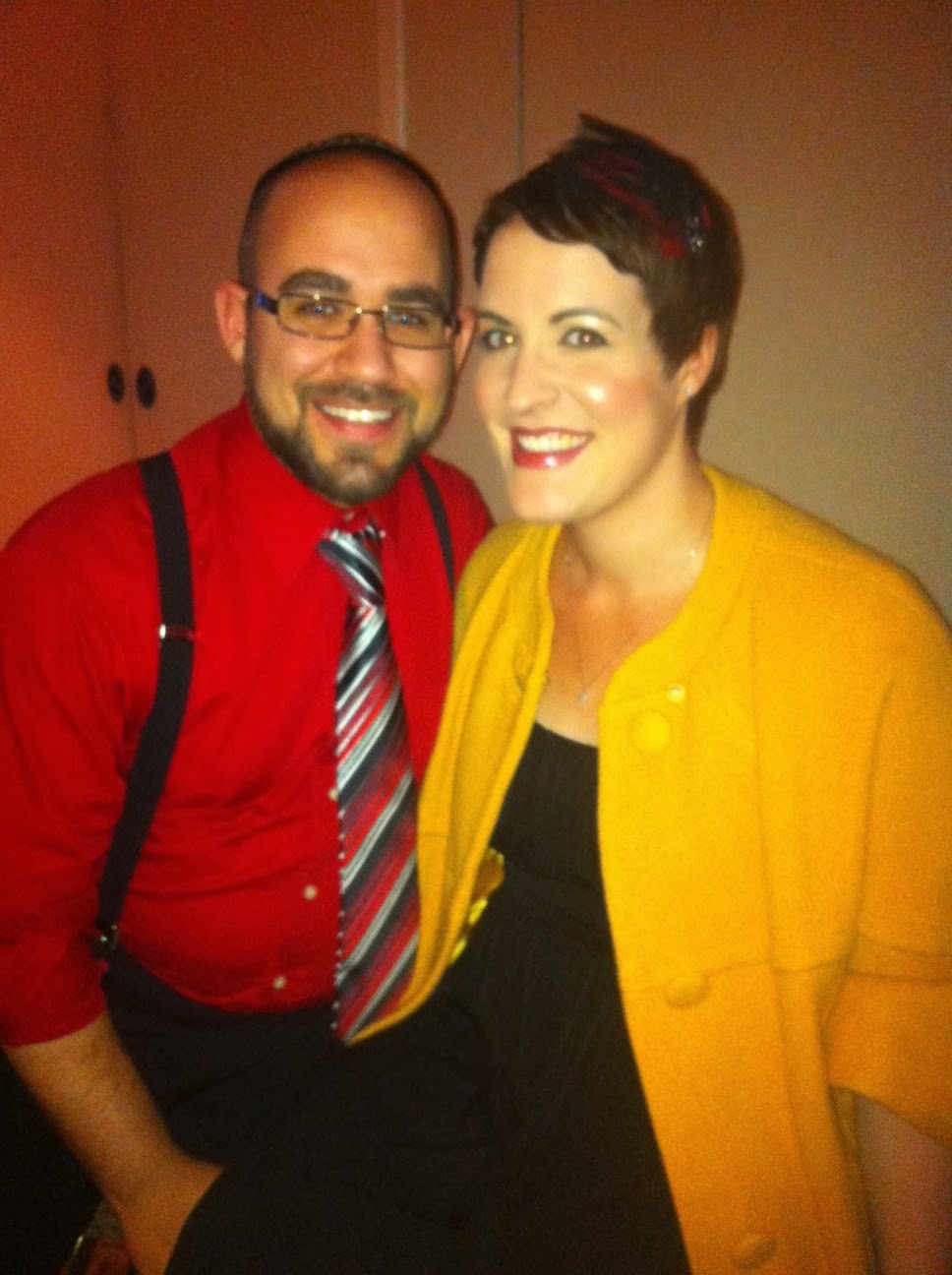
That said, I never really feel terribly "unsafe" at this fair. Maybe I just fit in with all the crazy down here. Even while walking through the far side of the fair, the vaguely third-world-ish jigsaw puzzle of trailers that serves as the ride-operator living areas (a colleague has described that section as "a travelling prison"), it doesn't seem too bad. Hell, I got two marriage proposals and a "hey beautiful" on my way to the laundry trailer this morning. 

Some women might have taken that as sexual harassment, but I am a carnival-American. We have thick skin and are not easily harassed. And if we do feel harassed, we give it right back. Harder. And on a stick. 

Tuesday, January 14, 2014

Putting My Art where My Heart Is

I'm sure I'm not alone in the desire to keep busy AND help out causes near and dear to my heart in the process. As someone with some artistic skills, lending one's drawing hand to various projects, charities, or educational drives just seems a natural fit. (NEVER give away your art to pesky clients who are trying to bully it out of you . . . but by selectively helping out causes you identify with, for people you admire, you get warm fuzzies and--yes--exposure.)

So this week I wanted to share with you all a piece of art and an associated Kickstarter. This delightful yellow guy is Frank N. Foode, the mascot for Biofortified.org, a blog populated by agroscientists and genetic researchers who have spent their lives trying to make food more available, more resilient, and more nutritious. My Facebook pal Twylla Bugg, a Canadian podcaster ("Legion of Reason") and all-around nice gal, kindly introduced me to the blog authors when she found out they were looking for an artist. 

I like food. And I like science. So food science is a natural draw for me. 

There's a lot of anti-GMO rhetoric going around these days, especially on social media (where accuracy in science, or in history, or in grammar, or in ANYTHING really, takes a back seat to a pithy statement merged with an eye-catching photo). Those who know me know that I've become something of a skeptic these days, and that means that I don't take memes at face-value. Fact-checking can be tricky on the internet, which is fertilized about as heavily as the average organic megafarm, but you can indeed learn how to navigate the huge tracts of sensationalist crap and find the peer-reviewed papers and articles written by science experts rather than science-illiterate web journalists. 

What I've gleaned from my reading (and I'm pretty sure I've read more than the average layperson) is that genetic manipulation is really our future, and it should be. It's actually safer and more predictable than the ways we have been improving our crops over the past few millennia (cross breeding and mutagenesis), and by boosting and/or transferring the natural resistance some plants have evolved to ward off pests or fungus, GMOs can help reduce the amount of herbicide and pesticide that is used in agriculture today. 

Is that potato giving us the finger?
GMO is probably the most misunderstood science out there right now. Except for a few holdouts at Fox News, most average folks now have some understanding of global warming, but the normally environment-conscious and science-friendly liberal left is still filled with GMO haters. Why? The problem with biotech food research is that there's a cornucopia of feel-good vibes associated with the opposition. Organic foods (which are becoming a monolithic corporate entity to rival even Monsanto's reputation) capitalize on the words "natural" and "sustainable" while hurling words like "chemicals" and "frankenfood" at the biotech community. Fear-mongering activists also constantly try to link biotech to images of farm animals tortured in overcrowded "factory" farms or greedy mega-farmers engaging in environmentally unsound practices. Plenty of GMO researchers also have their own veggie gardens, believe in sustainable farming practices, and don't want animals tortured. 

In addition, there is a conspiratorial bent to the way many (normally level-headed) people look at anything GMO. Any "scientific" evidence showing they do harm is taken as gospel, while any (peer-reviewed, statistically significant) evidence of their safety is brushed off with "of course that's what they want you to think! Big Farma just wants your money!" In fairness, our brains are hard-wired to remember things that might do us harm, and we do so with a visceral prejudice. Ever eat a particular thing like, say, Coco Puffs, while sick with the flu, then in your fluish state you vomit it all up . .  . and afterward for years you avoid Coco Puffs because the thought of eating them makes you feel ill?  That's your brain protecting you from something it deems a danger because it remembers being sick the last time you ate it. We apply this notion to stuff we learn, too. We just remember (and pass along) news about health threats way more than news of something being safe. Many folks have a vague notion that GMO corn "causes cancer." This was shown by one--only one--study known as the Seralini paper, published in 2012 and running counter to the many many studies that had heretofore found GMOs safe and noncarcinogenic. The Seralini paper has since been retracted after it was brought to light that authors used a too-small sample size and chose a breed of rat that was prone to developing tumors. 

Let me give you a for-instance. My siblings and I had hamsters as kids. Mine and my sister's died of tumors (as hamsters often do). My brothers' hamsters did not (I think they died of too much rough handling, personally, but they were tumor-free when they left this world). Conclusion: Being owned by a girl causes tumors in hamsters. Have I proved it? No. My sample size is only four hamsters and they are prone to tumors in the first place. 

I'll bet you've heard of the results if the Seralini study, even if it was just from a Facebook meme featuring a photo of tumor-ridden rats, but you've never heard a peep about the retraction or the study flaws. Likewise, I'll bet few of you have heard of golden rice, which was modified to produce vitamin A so that children in third-world countries going blind due to lack of this nutrient now have a better shot at keeping their vision. 

Besides the Biofortified blog, there are also a few other sites you can visit for news and actual facts on genetic research and GMOs. Check out www.geneticliteracyproject.org for starters. The site covers issues in both human and agricultural genetics and has a handy search feature. Another source of facts (and some snarky humor) is a Facebook group called GMOLOL, which is a forum where anti-GMO memes are tossed up for discussion and picked apart by scientists who know their stuff. Though there's no way to search the site (being Facebook and all), by scrolling down you will find nearly every scary anti-GMO meme or slanted news piece dissected . . . and the comment thread will enlighten you and make you chuckle. They also eagerly take questions from anyone who is anti-GMO as long as no namecalling or trolling goes on. But, as Mark Twain once said, "It's easier to fool people than to convince them they were fooled." I have seen a few GMO haters dig their heels in tight and rage in all caps, while more level-headed science minds try to point them to credible evidence.

Frank is spotted in the wild!
But, evidence shmevidence, GMO just sounds ugly, doesn't it? And the term "frankenfood" brings up all sorts of fears, right? Well, my hat's off to the Biology Fortified folks, who are running with the label imposed upon them and trying to lay their own claim to it. Their Frank N. Foode shall be informative and cute, a cartoon mascot for the scientifically literate (or even those who are open to becoming more scientifically literate). The Kickstarter launched by Biofortified.org this week (see their blog for details and link!) will fund production of a Frank N. Foode plushie doll, which is an adorable way to spread the love of science and what it can do for our dinner table. I feel lucky to be able to participate in this venture--and they are kindly paying me for some other cartoons here and there, but I have agreed to a much lower rate than I'd normally charge. (Remember, this is a group of PhDs working on a nonprofit public science awareness project, not a giant corporate powerhouse with deep pockets!)

But nothing ends up completely altruistic, it seems. Trading art favors can be rewarding in so many ways. Any seasoned caricaturist knows that this job can put you in front of the most interesting people in the world. Or, in this case, it put me in touch via with them via email and Facebook. 

Karl Haro von Mogel, plant geneticist rock star and one of the principal bloggers on Biofortified, actually agreed to let my stepson interview him for his high-school paper on GMO foods! And he took the time to formulate really complete answers to the sometimes sci-fi-inspired questions he was given. I wanted to share them below, because many folks probably have the same questions that the average high-schooler might about GMO. As I said, it's a highly misunderstood science! 

So enjoy, and thanks for indulging me on my not-exactly-caricature-related post. (Though Karl does touch on the intersection of art and GMO--yes, GMO technology does have a connection to artists! So there!)

1. What is it you exactly you do at your job, and the role it plays within the big picture?

I am a plant geneticist, and the kind of research that I do is to try to understand how plants work at a genetic level. As you probably know, every organism on this planet has DNA, and the instructions for building and maintaining living beings are coded into these DNA strands as “genes.” The different genes in each organism combine to give them their unique traits, and geneticists use those differences to figure out where the genes are that control these traits, and study how they work. The gene that I have been studying for my graduate thesis project is called “Sugary Enhancer” – which was discovered in the 1970s when a corn breeder found some sweet corn that was especially sweet. It has been bred into many different sweet corn varieties – you’ve probably eaten them – but we didn’t know what gene caused this. (It is not a GMO) Now we can use our knowledge of this gene to make it easier to breed better sweet corn varieties, and also improve other crops as well. This is because the genes that make sugar and starch in corn kernels are very similar to the ones that make starch in say, potatoes, so you can see how basic discoveries in one organism can tell us something about others. The long term goal of all of this kind of research is to improve our crops to make our lives better.

2. What exactly are GMOs, I've read a lot of biased stories and possibly even a lot of fake ones, but I haven't been able to really get a straight answer from any of them.

“GMO” stands for Genetically Modified Organism. These are organisms that have had their DNA altered by a process called Genetic Engineering. Because we discovered that the way organisms translate the genetic code within genes is essentially the same for all life, we can take genes from one organism and put them into the DNA of another to give it a new trait. That’s basically what genetic engineering is, and it can also be used to remove genes from an organism, or change and combine multiple genes into one to create a new one.
     Plant breeders have been modifying the DNA of crops for centuries by crossing different plants in the same species, or even between related species, ‘mutating’ the DNA to cause random changes, or making a plant have an extra copy of all its own DNA (These are called polyploids – seedless watermelons are made this way). Since all crops we eat have been genetically modified in some way, most scientists use the term “genetically engineered” or GE to mean plants that have been modified by moving individual genes. Here is a picture of what the process looks like to make a GMO plant.

Here are some of the genetically engineered crops that are being grown: “Bt” corn and cotton that are resistant to insect pests that try to eat the plants. These use a gene from a bacterium that makes a protein called “Bt” that kills specific insects that eat it, but gets digested normally by everything else. These need less insecticide when they grow, and produce a little more because they are protected from bugs.
  • Corn, cotton, canola, soybeans, sugar beets, and alfalfa that are “herbicide tolerant” so you can spray your field with an herbicide to kill weeds but not harm the crop.
  • Papayas in Hawaii that are immune to a devastating viral disease.
  • Bt insect-resistant eggplant has just been approved in Bangladesh.
And here are some GMO crops that have been developed and are being tested to see if they are ok to release:
  • Apples that don’t turn brown when you slice them open.
  • Potatoes that also don’t turn brown, and are safer to make French fries out of than normal potatoes.
  • “Golden Rice” which produces beta-carotene – the orange stuff in carrots that our bodies turn into Vitamin A for our eyes. This is being developed for people in developing countries who can’t afford to eat much more than rice on most days, and are going blind or dying because they don’t get enough Vitamin A.
  • Soybeans that make some of the same healthy oils that we find in fish.
Just to name a few!

3. Why do you think everyone is so against GMOs?

I’m still trying to figure that out, myself! It is a very complex topic, and most people are actually still undecided about them. But there are some people who are very much against them for one reason or another, and are very vocal about their opinions. Some, it seems, don’t understand the science, but others are worried about political issues, or whether the companies that sell them will get too much power, and some are concerned about safety and the environment. Because the GMO crops that are currently grown have traits that benefit the farmers who grow them, and don’t make the food taste better or be healthier, people who are worried about GMOs haven’t seen a benefit for themselves to accept them, and most everyone else hasn’t had the need to think much about them. I’m optimistic that some of this will change soon as more interesting GMO crops are developed, but any change in opinion will be a slow process.

4. What more do we do with GMOs that goes beyond our food supplies?

Genetic engineering is actually used in a lot of places – especially in medicine. It used to be that insulin, which people who suffer from diabetes have to take every day, was collected from dead animals. But today, most of this medicine is produced by genetically engineered bacteria. Vaccines that help our immune systems defend against diseases are also often genetically engineered. One of the odd things is that most people who are worried about genetic engineering applied to food are perfectly ok with using it to produce medicines.
     Another really important use for genetic engineering is in basic biology research, like the kind that I do. Scientists who are trying to understand how cells and organisms work can use genetic engineering to directly change the DNA of an organism and make this process go faster. It used to be that if you wanted to study the genes that code for an important part of an organism, you had to find a member of the species that lacked or had a mutated form – like a curly wing on a fruit fly. Then you would try to figure out what difference in the DNA caused that change. This has allowed us to figure out some basic genetics, but now you can potentially alter any gene with genetic engineering to study its role in the organism.
     Some people are also using genetic engineering in art! There are purple carnations and a light blue rose, along with fish that glow under a blacklight – all GMO. When we see this technology become easier to use, we’re probably going to see people express their artistic creativity with life itself.

5. If we research further into GMOs, do you think one day that we can genetically modify humans to be able to survive in different conditions because they were modified for it?

Eventually, we may be able to safely modify the genes of humans, but such a thing is still probably a long way off, and there are more ethical questions involved. We could probably do it right now, just like we can do with mice, or plants, but if you make a mistake, you risk harming a person. But someday, the first genetic modifications we may see with humans would probably be to correct genetic diseases for future generations. But even if it is safe and accepted, that is still the beginning of the ethical debate. What if you could change the DNA of your children so they run faster, or become more artistic, or have blue hair, or change other traits that could affect them for their entire lives in ways that you wouldn’t be able to predict? We (usually) don’t let our parents choose our careers for us, but what about our DNA? What about people who don’t have enough money to afford the latest enhancements, will that put their kids at a disadvantage? (One of my favorite movies is GATTACA which is about this!)
     There have already been some “GMO” humans born, but not the kind created through cutting and pasting DNA, but by combining cells to correct something that was missing. http://www.dailymail.co.uk/news/article-43767/Worlds-GM-babies-born.html
We humans have been modifying our environments rather than ourselves because it is a lot easier, and faster. But what happens if some humans start to live in space? We’re not well adapted to zero-gravity conditions, so perhaps a few hundred years into the future we may find a way to adapt ourselves genetically? (Or we can discover how to make artificial gravity and save us the trouble!)

6. Has there ever been a time when a GMO has backfired or caused any sort of random mutation that would cause the human population to turn down GMOs?

If you search for “GMO” on google you might think that these sorts of things happen all the time, but so far there haven’t been any disasters like that. Every now and then there is a study that comes out that suggests that there was something unexpected that happened when making a genetically engineered crop, or when feeding it to test animals. Some have been highly publicized – like one last year that claimed that GMO maize caused tumors in rats. But when the scientific community examines these studies more closely, or tries to repeat them, they usually find that there were problems with the original study and reject it. That tumor study was actually just retracted by the journal that published it. From thousands of published scientific studies, we know that genetic engineering in crop plants is not an inherently hazardous process. There are some minor drawbacks we have found to some genetically engineered crops and how they are grown, but not the kind to justify some of the fears that people have.

7. How heavily does the US government invest into this field of science?

The US government spends a lot of money funding scientists who do basic genetic research to understand how genes work, and to develop new technologies. The genetically engineered papaya in Hawaii was funded by our government, and has been a very successful crop. But right now, most of the investment in developing new genetically engineered crops and getting them through the safety regulations comes from private companies. I’m actually working on a project to collect all the published scientific research on GMOs into one place to put on our website, and when I look at the funding sources for this research a large part of it comes from governments around the world, especially the United States. I couldn’t put an exact number on it, but one report on how much the European Union has spent studying genetically engineered crops reported that they spent 300 million Euros on it since 1982!

8. Why are GMO grown crops much better than Organic Farming?

That depends on what you mean by better! (And it depends a bit on who you ask.) I like to think about them as two different approaches to getting safer, more abundant (and delicious) food, but right now a lot of people think they are polar opposites. Organic farming focuses on trying to rotate crops, minimize the use of pesticide sprays (by banning most synthetic ones and using ‘natural’ ones), and recycle nutrients from manure and compost to reduce the need for fertilizers. But the main drawback to Organic farming is that it produces less food on the same amount of land, and makes the food more expensive to produce and to buy in the store. Genetic engineering, on the other hand, is merely a technique for changing the DNA of a plant so that it has a new trait you are interested in. That can be a trait that also reduces the need for pesticides, or helps the plants survive harsh environmental conditions like drought or cold. It has been shown to increase the amount of corn that farmers can produce on the same amount of land, but they don’t address all the problems that farmers face. What I think is strange is that very few people are talking about combining these approaches. Some farmers who grow GMOs are using more of the farming methods that organic farmers use, but organic farmers are not allowed to use GMOs if they want to sell the food as Organic. But maybe someday that might change?

9. Is it possible to be able to modify the genetics of an organism far enough to the point where it would be classified as its own species? Going back to the modified humans, where if we modified them enough where they could survive under the sea without equipment and from there just be able to colonize on the sea-floor, would they still be considered humans at that point or because of how different they would become in many different aspects, would they just be their own race?

That’s a difficult question. Sure, it would be possible to change the DNA of a species enough so that you could consider it a new species, but the hard part would be to figure out where this line would be. We’re over 98% identical to Chimpanzees on the DNA level, even though we are a different species from them. That’s because we are different enough that we can’t interbreed with them. So let’s take your underwater civilization idea as an example. To live underwater, we might need some genes that give us gills, take away or reduce our lungs, and some fins for feet would probably also be a good idea just for starters. If people who are hybrids of regular humans and underwater humans are healthy, fertile, it will allow genes to move between the populations (this is called gene flow), and we’ll all still be the same species. But if the genes don’t combine well and people with half-gills and half-lungs can’t live, then there will be two human species on this planet. It all comes down to how well the genes from each species work together.

10. Is it possible to recreate animals of old using animals of today as a base and from there modify their genetics to what is similar to their ancestors (Example: Using a Tiger's DNA, and modifying it to be similar to the Saber Tooth Tiger)?

It may be possible to do this, depending on how good the DNA samples of the extinct species are. After organisms die, their DNA starts to degrade, and unless something like ice or amber preserves them, it will be completely gone. Even then, the strands will slowly break into pieces. If the pieces of DNA are too short, we won’t be able to figure out how to put them back together again. Bringing a wooly mammoth or a Saber Tooth Tiger back would be a lot easier than bringing back a dinosaur. But we have a lot of species today that are in danger of going extinct and it would probably be a better use of our resources to help keep them from disappearing too! At least until we can stabilize our impacts on this planet – such as the impacts that farming has on other life. But maybe someone will discover that a species that went extinct eons ago would be an important addition to the ecosystem today?

Monday, January 13, 2014

A Modest Proposal

I just wanted to share a blast from my past this week. A few weeks ago Robert and I were working a Bat Mitzvah . . . those are typically loud, rushed, and full of unruly tweens pumped up with sugar and delusions of adulthood. The kids at this one were actually pretty well behaved, and the Bat Mitzvah girl seemed mature beyond her years.

Then a couple walked up and asked "Are you Celestia?" I answered in the affirmative, but couldn't quite place them. They looked familiar . . . but a side-effect to this job is that everyone starts looking just a little familiar.

"I'm sorry, but I can't remember how I know you . . . Do I know you?" I stammered.

"Kind of," said the woman. "You were actually instrumental in us getting married."

Well that struck me. It took a moment but then she mentioned the restaurant, and it all came back. I was hired by an agency back in early 2011 to work a very unusual job: they offered me one hour of my party rate to drive to a restaurant, pretend I worked there every night, but draw just one picture. It was the dreaded proposal picture! Eeeeeeeek! I say "dreaded" because every caricature artist is both honored and scared shitless when one of these comes up. I've drawn maybe six or seven in my time working as a caricaturist, and each and every time the same fears run through my head:

She might say no.
She might say no and then hit me with her purse for drawing her nose too big.
She might say yes but be lackluster about it, making the guy feel like hiring an artist was a stupid idea.
She might be completely weirded out by her caricature and forget to even answer.
They might not like the picture and then be mad that I ruined their special day.
Um, yeah. There are ways to screw up a marriage proposal. 

They are likely 100% unfounded fears, yes, and none of the above has EVER happened. In fact, each and every time has worked out perfectly, with the proposal recipient squealing with joy, saying yes, a tender kiss being exchanged, photos taken, and the couple thanking me. But that doesn't prevent the fears from setting in when I find out I need to do one of these. It's a high-stakes game instead of a lark--and we caricature artists are used to being a lark, some piffle of a thing to do at a carnival for fifteen bucks. We are unaccustomed to pressure.

Most of the proposal drawings I've done were semi-live. Meaning that the fella would come by the stand and tell me on the sly that he was bringing his intended by in a few minutes, or after lunch or something, and he has been wanting to propose and he has this great idea and could I please draw him proposing, then when I turn the picture around he'd whip out his ring. Exciting!

Lately, I've taken a few precautions due to one or two close calls with idiots walking behind me as I drew and almost spilling the beans or asking douchebag questions like "Oy! Hey! Did she say yes?" before the big reveal. I make like I'm testing out my pencil on the scratch sheet but actually write a big all-caps warning "DO NOT GIVE AWAY THE SURPRISE!" This might tempt the douchebags, but it also draws in regular people, who gather around and tend to keep the jerks in check. I've seen people shush other people and keep the order as they wait for the picture to be finished. Yay for people!

When it's turned around, there's always the couple seconds of processing--which seems like an eternity if you're already in on the secret. I can almost see the saccadic movements of her eyes as she looks to her nose, her boobs, her everything in the caricature . . . then what's this, a word bubble? What does that say . . . Oh my gosh! She looks at him, sometimes asking "Is this for real?" and he (if he's quick) already has a ring out and is on one knee.
This guy was afraid he'd drop the ring while on
a helicopter, so I ended up being his back-up plan!

And then there's kissing and stuff. And over the past few years, there's eager folks texting or emailing their cell phone pictures of the proposal to the happy couple.

One nervous guy in Florida sought me out while his girl was in the ladies room, and told me nervously how he'd taken her on a ride earlier on the open-air helicopter across the fairgrounds and intended to propose then, but he completely chickened out because he was terrified he'd drop the ring and it would be lost forever out the helicopter door.

One other fellow found me on the internet and hired me for an hour, with the stipulation that I mill around the front of the Bellagio and pretend to be a "street caricature artist" (oh, the indignity). Plus I was doubly nervous that authorities might take issue with anyone sketching for money--be it city authorities or Bellagio authorities (Vegas resorts are known for having pretty clear ideas on what can and cannot happen on their private property, after all).

My short career as a street caricature busker.
I aim to please though, so at the appointed hour I stood around drawing a quick sketch of the front of the Bellagio fountain area, waiting for a guy to rush up and ask for a caricature, and sure enough he did. I told them sure, I don't charge but tipping is accepted (that's the standard line for street busker types--no one can legally charge, but tips are the goal). I laid down a few rushed lines on my drawing board, pretended I was drawing them, and after enough time had passed I whipped out the pre-drawn version I had done with photos and airbrushed the night before. The young lady's eyes widened for a second and she said "Wow, you colored it in so fast!" then she processed what was going on  and read the word bubble . . .

Then there was kissing and stuff.

But back to that Bat Mitzvah a few weeks ago. The gal had changed her hair since I'd last seen her--in 2011 at Battista's Hole in the Wall, a popular Italian eatery just off the Strip. I had to do some talking to the manager, who raised an eyebrow at my story about being hired by someone to come in and pretend to be the "house caricature artist." I had understood that the client had called ahead and arranged it so I would be allowed to do this, but the guy at the front of house was not keen on the idea. I talked him into letting me do my job provided I'd only approach their ONE table and ask if they wanted a caricature (I had thought I'd draw a few and make my way over there, just to look like I really was part of the establishment). Oh well, luckily their booth was situated so it really wasn't obvious that I'd made a bee-line right to them.
The happy couple back in early 2011 . . .

Just like at the Bellagio, I "pretended" to draw a quick one of them on my hand-held drawing board, but I really whipped out the nice airbrushed one that I'd hidden right underneath the first few sheets of paper. Again, a stare, a jaw-drop, then she looks at him, he has a ring, and then cue the "Oh my god! Yes!" and the kissing and stuff.

I also had wrangled one of the waiters into taking photos from a hidden spot, so he provided them with a few images of the event as it took place. Sorry, I don't have any of those, but y'all can imagine.

After shaking the soon-to-be groom's hand and telling the newly engaged young lady that she had a thoughtful and inventive fiance, I departed and breathed a sigh of relief that none of the imagined disasters took place and I was leaving a happy couple to plan their wedding. Phew!
And the happy couple now! (Er, this was in
December 2013) . . .

Well, now, almost three years later, that couple popped back into my caricature line of fire and was tickled to tell me they had a delightful wedding, were happily married, and wanted an update! I snapped their photo and told them I would love to blog or Facebook about the cool experience of running into them again, and they kindly obliged. Then they waited for the kids to all get drawn, as often the adults take a backseat at Mitzvahs and kid birthday parties. Luckily, I was able to draw them at the end--but dang it, my phone was out of batteries by then, so I couldn't get a picture of them with their new caricatures. Oh well, a picture's worth a thousand words, and I think I've typed out a thousand by now!


Tuesday, January 7, 2014

My Incredibly Important New Year's Resolutions

This year, for 2014, I resolve to always give my readers what they deserve and never resort to a quick, two-sentence gimmicky blog post in order to quickly move onto other projects that are due.

Well, goddammit, nevermind.